
Small brain cancer risk for cell phone users – WHO
Prolonged cell phone usage could increase the risk of brain cancer, the World Health Organisation has warned.

Prolonged cell phone usage could increase the risk of brain cancer, the World Health Organisation has warned.
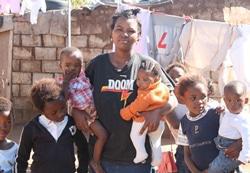
It's lunchtime in the Mnyameni household, but there is no sign of a meal. 'I'm hungry,' complains three-year-old Maria squirming next to her mother, Malta Mnyameni.

Despite government efforts to improve the living conditions of children, particularly through social grants, almost two-thirds of all South African children live in poverty.

The first 1000 days of a child's life ' from conception until the age of two ' largely determine what kind of a future that child will have.

South Africa has some of the most progressive anti-tobacco legislation in the world, however the informal sector is proving to be a major source of cigarettes for minors.

It is impossible not to notice David Mkefa's unusually hoarse voice. A tall and strong man, Mkefa smiles easily when he talks about living with cancer and his belief that it is directly linked to the fact that he smoked cigarettes.

The Health Department has appealed to men who have sex with men and organisations working with this sector to make their voices heard so that their needs are included and addressed in the next National Strategic Plan on HIV and AIDS.

Caring for an intellectually disabled child can be emotionally and physically draining. Parents are often unable to perform their daily duties, including giving other children in the family the attention they need.

British American Tobacco South Africa (Batsa) has failed in a high court bid to have parts of the country's tobacco advertising ban declared unconstitutional.
One of the ways in which companies can object to a decision made by the Medicines Control Council (MCC) is to appeal the decision in terms of Section 24 of the Medicines and Related Substances Act (Act 101 of 1965). By Roy Jobson.

South Africa should set a bold example to the rest of the world by resolving to triple the number of people on antiretroviral medication by 2015.
The homophobic attitudes of public health care workers may have a direct influence on the spread of HIV and other sexually transmitted infections in the gay community. Many gay men or men who have sex with other men avoid the public health service out of fear of being ridiculed.

A three-day conference to be held in Cape Town from today will focus on men who have sex with men (MSM) as a key target group to consider in developing policy and interventions for HIV prevention and treatment.
The 2011 influenza season is upon us and people, more particularly high risk persons, are strongly encouraged to get vaccinated to avoid major complications such as pneumonia.

In the last 20 years there has been a steady increase of pneumonia cases in adults, mostly in people living with HIV. A significant proportion of those infected die.