
Health e News

Some members of rural communities in KwaZulu-Natal are convinced that a traditional beer known as Ijuba, can cure ulcers by drinking at least two glasses daily to ease the pain. They have taken to social media as well as word of mouth to spread these revelations to their friends and families. Even though this is no scientific evidence to medically prove that Ijuba works, these people are adamant that drinking the beer soothes ulcer pain. However, some believe it’s a myth. Word on the street Health-e News spoke to a few people in the province and all of them agree that Ijuba beer can cure ulcers. Nompumelolo Xaba from Ulazi said although she’s not sure that Ijuba can cure ulcers, it certainly does provide relief in the absence of pills. “I have used it and it has worked for me. Once I have drunk it, I can feel the pain

Ntsu, once used exclusively by traditional healers to connect with their ancestors, is gaining popularity among youth who are struggling to resist this form of smokeless tobacco. Young women in KwaZulu-Natal have especially taken to ntsu, which is usually sniffed through the nose or placed on the lower lip. Nomagugu Zungu* shared her story with Health-e News about how she got addicted to this easy-to-access drug. Paying the price “I call it a drug because it has drugged my life, my mind, and even ruined my relationship with my partner who was going to marry me,” said Zungu. Her then-boyfriend broke up with her after he discovered she’d started using ntsu. “I didn’t mind at first, but as time went on and years passed, I realised that I had lost someone I loved because of this drug,” she added. “But sometimes I would comfort myself and think that maybe our

A mother of three from the North West is calling on black South African stem cell donors to help give her husband a second chance at life. Bomikazi Mtengwane, 36, said nothing would make her happier than seeing her husband healthy and returning home to her and their children. According to Mtengwane, life has not been the same since her husband was diagnosed with T-Cell Acute Lymphoblastic Leukemia, a type of cancer involving the bone marrow where blood cells form. When her husband, Unathi, also 36, had flu-like symptoms in 2017, they didn’t think it could lead to the life-altering diagnosis that forced him to receive leukaemia treatment at Soweto’s Chris Hani Baragwanath Academic Hospital in July last year. Early warning signs “He started having flu in January 2017 but did not want to go to the clinic or doctor. Unathi just told me to buy him flu medication, and

A campaign to save the reputation of traditional healers in Limpopo is showing positive results, with only one witchcraft-related murder having occurred in the last eight months. Professor Mbaimbai Hlati, the president of the Traditional Healer Association in the Southern Africa Development Community (SADC) region, realised that something had to be done to prevent the senseless killings of vulnerable, older people. Although numbers may have dropped in recent months, it doesn’t erase the pain suffered by many families before. During the last 17 years, Khubani Manganyi has not only mourned the loss of her mother but has also lived with the stigma of being called the daughter of a “witch”. In 2005, Manganyi’s mother and aunt were murdered at their home at Greenfarm village, just outside of Malamulele in Limpopo. Since losing her mother, Matsimbandlela Manganyi, 78, and 87-year-old aunt Nyanisi Chauke, she leads an isolated life filled with distrust.

What was supposed to be a joyful birth experience, soon turned into a nightmare for a grandmother who had to bury her daughter and her granddaughter. When Maggie Mphahlele started experiencing labour pains on the night of March 10 this year, her mother, Leah, called an ambulance and travelled with her daughter to Lebowakgomo hospital in the Capricorn District of Limpopo, looking forward to welcoming another grandchild. But the joy soon turned to heartache for Leah, who lost her daughter, and according to her, her grandchild is “still missing”. Grandmother shares ordeal The distraught woman has pointed fingers at three hospitals in an interview. “I boarded the ambulance with my pregnant daughter, and she was admitted to Lebowakgomo Hospital on the 10th of March (2022). It was at night, and I had to sleep at the hospital. The following morning, on the 11th, at about 5am, an ambulance took her
Food parcels are handed to residents at a food distribution organised by the grassroots charity Hunger Has No Religion, in Westbury, Johannesburg. MARCO LONGARI/AFP via Getty Images Irene Labuschagne, Stellenbosch University One in ten South Africans go hungry every day. As a result malnutrition levels are high. Malnutrition has three simultaneous dimensions: undernourishment, micronutrient deficiencies and over-nutrition. These can manifest in stunting – being short for one’s age because of long-term undernutrition. In 2016 it was estimated to be 27% among South African children. This is high. Africa is currently the only continent where stunting rates continue to rise, with 27% of African children classified as stunted in 2018. Another consequence of malnutrition is overweight and obesity. There has been a dramatic increase in both among adults in the country from 29.6% in 1998 to 39.8% in 2016 in women aged 15–24 years. In women aged 45–54 years it increased

Millions of South African school girls have to contend with their monthly periods without having any access to sanitary products. Making their lives even more difficult, is the prevalence of stigmas which only worsen period poverty – a huge problem in our country. Up to seven million girls do not have access or cannot afford to buy sanitary products. Although no official statistics are available, it is estimated that 30% of South African girls do not attend school while they have their period. Not having access to these products often leads to ridicule from their peers, further perpetuating the stigma around menstrual cycles. These stigmas manifest themselves when females are taught about their periods. Women are often told to keep their cycle a secret, or that they are unclean during this time. Some of these myths go as far as preventing young girls from participating in prayer or being kept

Patients at the KwaMhlanga hospital in Mpumalanga have to travel 60km away to get x-rays done. According to patients, the x-ray machine has not been working for over a month. Thabo Msiza said he took his father to KwaMhlanga hospital twice in April, and the machine was not working. “My father was always ferried to Mmametlhake Hospital for him to access his scans. That was an inconvenience because he was unable to travel a long distance,” said Msiza. Amos Sibanyoni said his sister experienced the same issue after being involved in an accident last month. Department denies machine is not operational The hospital arranged for several patients, including his sister, to be taken to Mmametlhake Hospital. “I asked what was wrong with the machine, and I was not given a straight answer. Even the radiographer at the hospital was nowhere to be found,” said Sibanyoni. The provincial health department denied

Activists have raised concern about the ongoing vulnerability of elderly people in South Africa after the recent murder of a 70-year-old woman, allegedly at the hands of her son. Earlier this month, Greta Xaba (70) from Clermont township west of Durban, was allegedly beaten to death by her son. He is a police officer stationed at KwaDabeka Community Service Centre. Her death left the community shocked. “The murder of uGogo Xaba has left the community devastated and worried about the safety of elderly people. It has also made us wonder if it is safe to leave [them] alone,” said Cele. She said there need to be community forums that can monitor these situations to protect old people from abuse. Nhlaka Mnqayi, another community member from the KwaDabeka township said society must be taught the important role older people play. “There should be more awareness events and campaigns and its importance
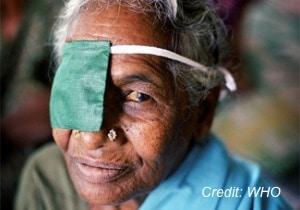
Patients in need of eye operations in the Sekhukhune and Capricorn districts in Limpopo are disappointed because the Warmbath Hospital in Waterberg District has not called them despite promising to do so a few months ago. Joshua Leselo* (71) from the Phokoane village near Jane Furse, Sekhukhune district desperately needs an operation to restore his full vision. “I started to lose much of my vision some three years back,” Leselo says. “I went to Jane Furse hospital in Sekhukhune district and was diagnosed with [a] cataracts, (a condition in which a person’s vision becomes cloudy leading to blindness). There is no eye doctor at Jane Furse hospital. And during September last year, I heard about FH Odendaal hospital in Modimolle in the Waterberg district which is about 300km away. I then find other patients to team up with so we can hire private cars to go there.” He found out

