
Health e News
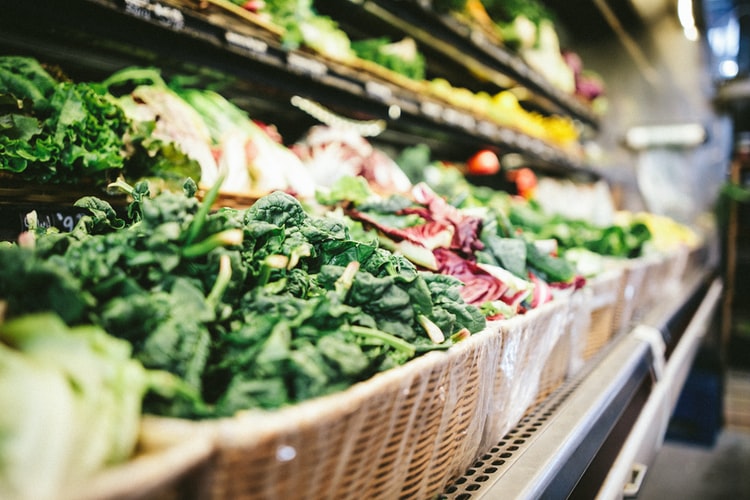
Have you noticed that every time you do your monthly shop it seems like your trolley becomes more expensive? With rising prices, all around, South Africans are feeling the pinch. But did you know that climate change is also part of the problem and is contributing to inflation? On 6 May 2022, IPES-Food (International Panel of Experts on Sustainable Food Systems) released a special report on the state of the global food crisis and world hunger. The scientists explained that, as climate changes put pressure on local farmers, South African food prices could rise and more money will also need to go to importing food. It’s been happening for years. The World Bank reports that “over the past few decades, Africa’s food import bill has more than tripled”, reaching about R559-billion ($35-billion) a year. Here are shopping cart items that are likely to get more expensive and elusive thanks to

The Global Fund has donated R8.8-billion to South Africa to fight HIV/Aids, tuberculosis, and malaria. The grant, which runs for three years from April 2022 until March 2025, gives a major boost to the country’s efforts to eradicate these diseases. Health Minister Dr. Joe Phaahla said the government would ensure the funding was used efficiently. “We will increase our efforts to quickly implement our programmes in HIV and TB to recover some gains which were reversed due to COVID,” said Phaahla at the signing ceremony on Thursday. [WATCH] The Global Fund Grant Signing Ceremony with 4 principal recipients getting their share of over R8,8 billion rands for HIV and TB response in SA communities has been concluded. pic.twitter.com/gXL64hkqkW — @SAgovnews (@SAgovnews) May 12, 2022 He said the fund will contribute to efforts to save the lives of people living with HIV and Aids and TB. “Already we are rolling out

The Accident and Emergency Unit at the Charlotte Maxeke Johannesburg Hospital has reopened after a blaze forced the closure of the facility over a year ago. Speaking at the reopening on Monday, Health Minister Joe Phaahle said the reopening of the unit is part of a phased-in approach to bring the hospital back to being fully operational. He said the first group of patients have already been admitted. There are currently 15 mental health patients being treated in the unit. The majority of these patients were transferred from Helen Joseph Hospital on May 4th. “The process of gradual transfer of patients from other facilities to this hospital has been going smoothly since the beginning of this month. Of course, this also meant even staff members, especially those who were temporarily transferred to other hospitals had to gradually return to their permanent workplace,” Phaahla said. CT Scanner being fixed But no

Sara E Casey, Columbia University A leaked draft of a majority opinion of the US Supreme Court has revealed the court’s leaning towards undoing its 1973 landmark ruling (Roe v Wade) which gave women in the US a constitutional right to abortion. The leaked document is not the court’s final decision – this is expected in a couple of months. But reproductive health experts are warning that it could threaten women’s rights around the world. The Conversation Africa’s Ina Skosana spoke to reproductive health researcher Sara Casey about how women in Africa could be affected by US policy decisions. 1. What is Roe v Wade? What’s its significance in relation to abortion rights? Roe v Wade is the landmark United States Supreme Court decision that gave women a constitutional right to abortion. That decision means that pregnant people living in the US can obtain an abortion on request, subject to

The Department of Health announced on Thursday that children must continue wearing masks at school and other general indoor gatherings. On Wednesday night when it released new limited COVID-19 regulations, it stated that children would not have to wear masks at school. But late Thursday it retracted the statement, and said the confusion was created by “regrettable human error”. “Children like other people are expected to continue complying with the provisions of Regulation 16A on face masks in the classrooms and general indoor gatherings, unlike outdoors in playgrounds and sports fields,” the DoH said in the statement. It reiterated that face masks are an effective non-pharmaceutical intervention against the spread of COVID-19, and said it was especially crucial now as the number of COVID-19 positive cases has started to rise again. “The department reminds the public that vaccination services against Covid remain available and accessible, and we can mitigate the

South Africans will have to continue wearing face-masks in indoor public spaces for now. The National Department of Health announced limited regulations on Wednesday an hour before current COVID-19 regulations were due to expire at midnight. These limited restrictions, which come into effect on Thursday, mainly focus on wearing of face masks, gatherings and persons entering the country. “South Africans must continue wearing face masks in indoor public spaces. However, this does not apply to children at school. Under these limited regulations, no person may use any form of public transport unless wearing a face mask,” the Health Department said in a statement. At any indoor and outdoor gatherings, venues can accommodate people to a maximum of 50% of its capacity if every attendee is vaccinated against COVID-19 and can produce a valid vaccination certificate. A valid negative COVID-19 test result not older than 72 hours prior to the date

A sharp increase in the number of COVID-19 cases in South Africa suggests that the fifth wave is imminent. The country’s rate of infection has hit a three-month high, just a week after the Easter weekend. The latest figures reported by the National Institute of Communicable Diseases (NICD) are 4,406 cases. South Africa’s positivity rate has also rocketed to 15.6%, almost doubling in seven days. National Department of Health spokesperson, Foster Mohale, said the department has observed the rise in infections and is ‘concerned’, since the national vaccination rate is well below target. The government hoped that at least 70% of the adult population would’ve been fully vaccinated by the end of 2021. As it stands, only 49.18% of South Africans over the age of 18 have either received two doses of Pfizer or the single Johnson & Johnson (J&J) jab. ‘Fifth wave will be similar’ Professor Salim Abdool Karim,

eThekwini residents have resorted to using dirty water from local streams following last week’s devastating floods in KwaZulu-Natal. Water infrastructures and roads were severely damaged, forcing community members to scrounge for anything they can get their hands on. Although water tankers have provided temporary relief, they too are under severe strain with drivers still trapped and unable to get to work. This reduced capacity as well as empty reservoirs has placed a huge burden on the eThekwini Municipality to rectify the situation. With no water coming from their taps, residents are using stream water which is often littered with diapers, sanitary pads and tissues. If this water is not adequately disinfected, it poses a risk to health. Contaminated water and poor sanitation are linked to transmission of diseases such as cholera, diarrhoea, and hepatitis A. Residents share their anguish Gugulethu Mazibuko, an elderly woman who lives in Embo on the

The devastating scenes from last week’s floods in KwaZulu-Natal (KZN) provided a stark reminder of not only how fragile life is, but also how healthcare systems rely on infrastructure and roads in times of need. With almost 450 people having lost their lives and close to 50 000 having been displaced, President Cyril Ramaphosa announced on Monday night that the country will return to a national state of disaster to assist flood victims. This comes after the Department of Cooperative Governance and Traditional Affairs (Cogta) declared a provincial state of disaster last week. Nurses, patients left stranded Damaged roads have prevented both healthcare professionals and patients from accessing facilities. According to the Democratic Nursing Organisation of South Africa (DENOSA), hundreds of people, in need of emergency services, are stranded. It has called on the provincial government to prioritise road maintenance to allow ambulances to gain access to health service key

Young boys and men are looking forward to participating in the ritual of becoming a ‘real man’ after cultural circumcisions were given the green light to resume in Mpumalanga and Limpopo. This follows a two-year ban due to COVID-19. Koketso Maile*, of Matibidi in Mpumalanga, is all smiles and can’t wait to begin his next chapter. “I am already old and should’ve gone through my rite of passage at the age of 12 so that I can cope without distractions like dreams and girls. I have already undergone medical circumcision, but going to the mountain is something I’ve been looking forward to,” said the 15-year-old. But some aren’t as lucky as him. Mogau Kekana*, who resides in Zebediela in Limpopo, has chosen to put his studies first. “I am 17-years-old and currently studying at university. If I take a break now, I might lose my NSFAS bursary. But I know

The days of waiting in long queues for medication are over following the launch of Collect & Go smart lockers. These medication dispensary containers work similarly to ATMs, ensuring your next collection will be fast and fuss-free. Right ePharmacy introduced these lockers in 2020 and at the end of February 2022, almost 434 000 chronic prescriptions had been loaded. A further 336 000 prescriptions were collected from 64 Collect & Go sites in Gauteng, Free State and Mpumalanga. Corneel Kraamwinkel, Senior Operations Specialist at Right ePharmacy, said that South Africa currently has 64 Collect & Go sites. He added that there are a further 11 sites deployed in the Western Cape and another 11 in Limpopo. These smart lockers have ample benefits alongside ease and functionality. Medication is safely stored and they aid COVID-19 regulations by allowing a safe distance between collectors. The biggest advantage, however, is helping patients to

Children can often be reticent when it comes to talking about their feelings. So, one Soweto assistant teacher decided to use the classic ice-cream cone as a tool to get them to open up about their mental health. “I love ice cream … and believe ice cream can come to you at times when you are facing storms,” said Nompumelelo Magezana, while explaining how she came up with the idea of using the much-loved treat to help children. Her work, as an assistant teacher at a Soweto primary school, brought her face-to-face with the problems children experience. A calling “I picked up things like the way they behaved which linked to their mental health. From there, I knew they needed my assistance and I had to do something,” she explained. As a child, Magezana had a difficult relationship with her mother. She also survived child abuse and understands the challenges