
Most vulnerable pay during strike
OPINION: Florence Nightingale, the woman widely credited with introducing professional nursing standards, died 100 years ago this month.

OPINION: Florence Nightingale, the woman widely credited with introducing professional nursing standards, died 100 years ago this month.
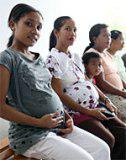
Services at Mowbray Maternity Hospital's outpatients department were largely suspended and most patients were told to return at a later date after workers failed to pitch for work yesterday.

People taking life-long antiretroviral therapy have been left stranded and are being forced to skip crucial treatment as the public sector strike continues.

The public servants' strike has left patients high and dry as services have shut down and patients are being turned away from hospitals. A visit to the Sebokeng Hospital in the Vaal proved just that.

A row of tiny babies, many premature and weighing less than a kilogramme, lie under blue ultraviolet lights. Feeding tubes snake into their little noses while others are fed intravenously.

For the last decade, everyone living and working with AIDS has been preoccupied with securing access to life-saving drugs. Now that just under a million South Africans are on ARVs, there's a new frontier in the fight against the virus: Safeguarding the human rights of people living with HIV.
Government got an interdict over the weekend ordering public service workers to return back to work. In the wake of the strike last week, public sector hospitals, which already operate with insufficient staffing levels, were abandoned and patients suffered the consequences.
Lucas Shimanga, a finance clerk at the Charlotte Maxeke Johannesburg Academic Hospital, is one of hundreds of thousands of striking government employees who have abandoned their posts at various institutions, including hospitals and schools.

Government resorts to court to prevent intimidation of healthworkers as patients are abandoned in hospitals.

There is chaos and widespread intimidation in KwaZulu-Natal hospitals as working nurses and doctors are coerced to join the strike by public servants.

Have you ever wondered why HIV spreads so fast in Africa? Have you ever thought that people considered high risk takers, like sex workers and truck drivers, are at more risk of HIV infection than yourself? Molecular biologist and author, Helen Epstein, turns conventional wisdom around in her renowned book, 'The Invisible Cure: Africa, the West and the Fight against AIDS'.

Advocacy organisations in the US and Uganda have welcomed the announcement that the U.S. global AIDS program, PEPFAR, has reversed severe restrictions that capped enrollment of new HIV patients on life saving treatment in Uganda.

Every 17 seconds a woman is raped in South Africa. According to the South African Police Services' 2006 rape statistics, close to 55 000 women reported being raped that year. But how many more rapes go unreported, and why?

The Public Service Accountability Monitor has issued a statement revealing details on the dire state of the Eastern Cape health department's finances. It also called on the department to reveal how the situation will impact on patients.

At the recent International AIDS Conference in Vienna, Austria, Health Minister Dr Aaron Motsoaledi appealed to donors to desist from cutting aid to support AIDS programmes in sub-Saharan Africa. The irony of his call, however, is that countries in Africa are not increasing their spending on health.