
Health e News

Eastern Cape (EC) hospitals have had to make do without food and medical equipment with close to R40 billion used up by medico-legal claims. The provincial health department’s budget has been brought to its knees forcing institutions to step in and try and help. Humanitarian and relief organisation, Gift of the Givers, has been called in to rescue a dire situation. Over 40 hospitals in the province have sent an SOS to various institutions to assist in the provision of foodstuffs. Department in denial Gift of the Givers confirmed last weekend that the Eastern Cape Department of Health requested assistance in the supply of food. However, the department, in a written reply, denied that some of its hospitals are running short of supplies. Eastern Cape health department spokesperson, Yonela Dekeda, rubbished the claims. ”The department dismisses the claims that there is no food in our hospitals,” said Dekeda in a

Young South Africans face a myriad of challenges daily with mental health issues at the forefront. Although turning to cannabis is now legal, studies show that lighting up a joint as an escape from everyday stress could result in poorer educational outcomes, writes Kagiso Keipopele. Health-e News spoke to a few students during end-of-year exam time to find out about how they use cannabis to treat symptoms of depression and anxiety. In September 2018, a landmark decision by the Constitutional Court in South Africa legalised certain acts in relation to cannabis. In particular, the court ruled that the private cultivation, possession, and use of cannabis by an adult for personal use should no longer be a criminal offence. Negative impact on educational outcomes A research report by the National Institute of Drug Abuse (NIH), revealed that cannabis reduces the intellectual level and there is substantial evidence that cannabis has a

The COVID-19 pandemic has raised awareness of the alarming prevalence of mental, neurological and psychosocial disorders and the importance of giving them appropriate attention, especially for medical professionals. Globally, more than 300 million people of all ages suffer from depression, which remains a major contributor to the overall global burden of disease. According to the World Health Organization (WHO), around 800 000 people take their own lives every year. So, with the elevated levels of stress, anxiety and depression that many have suffered during COVID-19 due to prolonged isolation, grief, job insecurity and uncertainty about the future, it is encouraging to know that governments, corporates and societies are starting to prioritise mental health and well-being. At the height of the pandemic, South Africa experienced a gross shortage of healthcare workers to cover shifts in hospitals. Limited resources and an increasing workload inevitably challenged medical professionals’ ability to perform optimally. Already

The majority of sexual harassment incidents aren’t reported in the workplace because victims fear management won’t do anything about it. A survivor shares her experience, one that at least had a satisfying conclusion. *Mandisa Ngobeni, a creative writer, said she was still an intern when she experience sexual harassment for the first time. “I was an intern in a media publishing company and worked as a writer. It was my first big job that was in line with my career goals and qualifications. I was nervous, excited and wanted to make a good impression. I had a short-term contract, three months to be exact. However, my contract was extended,” said Ngobeni. Beyond uncomfortable “My employer approached me during my lunch break at the cafeteria and he offered to pay. I declined his offer. He proceeded to ask me out and I refused. After my lunch break, he approached me at

Statistics show that about a third of girls in South Africa will experience some form of sexual abuse during their lifetime, and one in five children will be sexually assaulted. More needs to be done to combat this serious issue. Rape remains one of the biggest challenges facing South African society, with a third of girls in the country experiencing some form of sexual violence during their lifetime – often at the hands of someone they know. The 2019/2020 Annual Crime Statistics presented by the South African Police Service (SAPS) earlier this year showed that more than 24 000 children were sexually assaulted in South Africa during that period. One in five children are victims of sexual abuse, representing 19.8%, compared to a global average of 18% for girls and 8% for boys. Worrying numbers Violence against children remains a critical challenge for South Africa. The latest crime statistics released

More than half of South African women have experienced gender-based violence (GBV) and the impact on their mental health is devastating. Studies show that these survivors are three times more likely to contemplate suicide as an outlet. GBV is a violation that has a social and developmental impact on survivors. It can be physical, sexual, emotional, financial, or structural. Perpetrators are usually known to the woman and it can lead to psychological trauma. Survivors also face psychological, behavioural, and physical consequences. Cristianne Wendler, Head of Programs at Shout-It-Now, a non-profit organisation (NPO) that empowers youth, said nothing has changed since South Africa last marked the 16 Days of Activism. ‘Nothing has changed’ “Every year, we, as a society, highlight GBV and renew calls to eradicate all forms of violence against women and girls. But, in the 23 years since SA joined the 16 Days of Activism campaign, what has really

Pfizer is expected to make an application to SA Health Products Regulatory Authority (SAHPRA) early next year to have its COVID-19 vaccine administered to children under 12. This emerged during the National Health Department’s update on South Africa’s preparations for the fourth wave of COVID-19. Health authorities have noticed a sharp increase in the number of children affected by COVID-19 in this wave, Dr. Wassila Jassat, Public Health Specialist at the National Institute of Communicable Diseases (NICD) said on Friday. “There has been an increase in hospital admissions of those under five. This could be due to an immunity gap as more adults are vaccinated, children are susceptible,” said Jassat. The highest percentage testing positive was observed in the age group 10-14 years (15.8%). pic.twitter.com/2z40gBuaTN — NICD (@nicd_sa) December 3, 2021 She added the infection is moving into the older age groups. More children being testedAnother reason could be more

The absence of a father in South African families is fast becoming a norm as more male family members take on the role of ‘social fathers’. A study, State of South Africa’s Fathers (SOSAF) 2021, revealed that at least 41% of children co-reside with men who are not their biological fathers. However, 61% of men reported living in the same household as at least one child when interviewed during COVID-19 lockdown in 2020. Social fathers are father-figures in a child’s life that are not biologically related to the child. However, these fathers have decided to take on the responsibility and role of the father. They are physically, financially and emotionally engaged in the life of the child. Social fathers are usually men who have been employed and are older brothers, uncles, grandfather or even the mother’s partner. Used to father not being around Phaswana Asakundwi Emmanuel is a young man

This World Aids Day, South Africans are carrying the greatest HIV/Aids burden in the world, our country’s original pandemic. Yet, to combat COVID-19, our country has been able to move millions of people through vaccination sites each month. So, how do we utilise COVID-19 learnings and vaccination sites to bridge this gap for all our people living with HIV/Aids? Imagine if we turned each large community-based vaccination site into an opportunity where individuals could not only be vaccinated but also get screening and counselling for other critical health concerns? A large number of community-based outside facilities have the option to become multifunctional centres, we just need to figure out how to balance our resources. I run part of one of the world’s largest HIV Care and Treatment programmes, which is funded by the USA’s PEPFAR (President’s Emergency Plan for AIDS Relief) fund and USAID and is operated by BroadReach, global
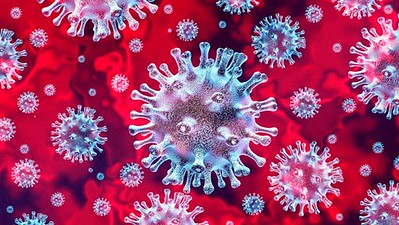
Health Minister Dr.Joe Phaalhla has urged South Africans not to panic about the emergence of the Omicron variant of the coronavirus. Speaking at a virtual media briefing on Monday, Phaahla and a team of scientists moved to allay fears, as many countries reacted to Omicron by imposing travel bans on South Africa. Protection from current vaccines expected to remain strong Epidemiologist Professor Abdool Karim said current vaccines are expected to provide protection against severe illness. “Protection of the vaccines is likely to remain strong. I don’t know this definitively – the studies are being done – but based on what we know, we can expect that the vaccines should hold well in preventing hospitalisation and severe disease,” said Abdool Karim. Phaahla said there was no need for panic. “We have been here before, this is not new territory for us. We now have more than 20 months’ experience in terms

Gauteng has entered the fourth wave of the COVID-19 pandemic, said Dr. Michelle Groome, head of the Division of Public Health Surveillance and Response at South Africa’s National Institute for Communicable Diseases. Speaking at a news conference on Monday, Groome said Gauteng has seen a rapid and sustained increase in COVID-19 cases. “For all intents and purposes, Gauteng is in the fourth wave. This will certainly spill over to other provinces,” said Groome. She said Limpopo, North West, and Mpumalanga are currently experiencing an increase in cases. COVID-19 variant called Omicron was detected in the country last week. It has 30 mutations and while scientists are still studying Omicron, it is likely to be more transmissible. Young children testing positive The new infections are being driven by younger people but those who are dying are over the age of 65, said the NICD’s Dr. Wassila Jassat said She added that

The Khujwana Clinic remains unfazed by the numerous complaints of staff taking lunch and forcing patients to wait. Not even a sit-in staged by the Treatment Action Campaign (TAC) got their attention at the Tzaneen-based health facility. At one stage, there was only one nurse available causing patients to wait for treatment for hours at end. The TAC jumped in as a result and aired their gripes as patients’ rights continue to be violated. TAC takes aim Rebecca Hlugwani from the TAC was all guns blazing during the sit-in during September. “We are concerned about how the clinic is operating and the constant violation of the rights of the patients. We will engage with the clinic management and committee about such matters,” she said. Hlungwani added that due to the barrage of complaints lodged by patients, they’d be visiting the clinic for further engagement soon. “We will meet with them