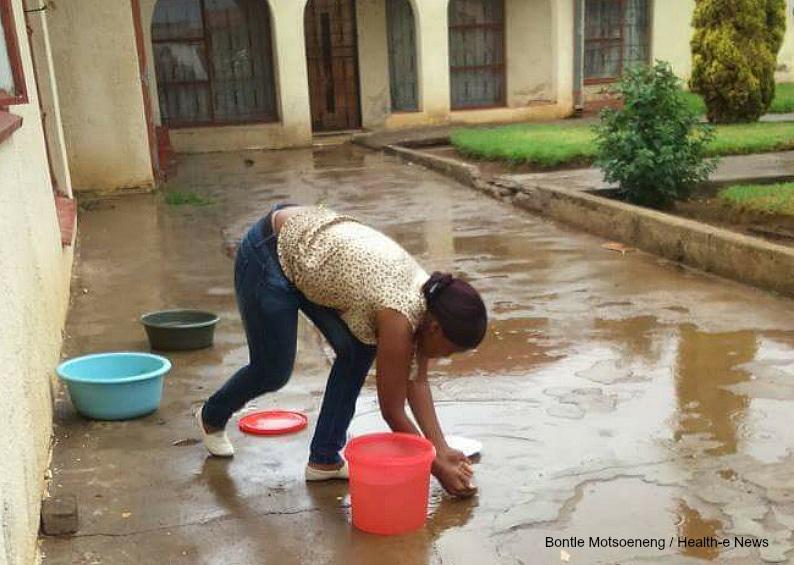
Free State residents go thirsty as dam dries up
For thirsty Qwaqwa residents in the Free State, their next drink of water may be more likely to come on wheels instead of from the tap as reservoir water levels run low.

For thirsty Qwaqwa residents in the Free State, their next drink of water may be more likely to come on wheels instead of from the tap as reservoir water levels run low.

More than 1000 learners and teachers at Nelspruit’s Gedlembane Secondary School are forced to share just two toilets as a water shortage means 13 new toilets have stood idle for about a year. The school is just one of hundreds in the country without proper water and santanitation.

Imagine if you had to crawl outside on your hands and knees to use the toilet every time nature called. For at least 19,000 South Africans living with disabilities, daily indignities like these are just part of normal life as disabled people remain largely left behind in the country’s quest for sanitation and water.

As South Africa continues to battle the worst drought in more than two decades, small farmers in Limpopo are reporting that hundreds of chickens have already fallen victim to the rising heat in a turn that could financially ruin farmers and leave households hungry.

Airlifted food shipments have brought some relief to barricaded Bethesda District Hospital, which has been largely cut off from patients and supply deliveries for four days forcing some patients to walk up to 18 km for medical attention.

April Eiland claims his home in Douglas outside of Kuruman is plagued almost daily by horrid smells emanating from blocked sewers and he claims the Siyancuma Local Municipality has done nothing to fix the problem since he first reported it last year.

Two women wage a daily struggle against toxic dust entering their homes and lungs, the legacy of mining on the West Rand, which yielded gold necklaces for some and bleeding sinuses and kidney disease for others.
Residents of Ermelo’s Wesselton township say they are tired of blocked sewers that have been sending foul-smelling water into their yards for years.

Poisoned air, water and earth - our health is being undermined everywhere by mining companies. Yet mining is the only sector that does not need environmental approval from the Department of Environmental Affairs to go ahead with its operations.

Over a million Gauteng residents are exposed daily to high levels of uranium with some areas in the West Rand exceeding that of disaster zones from Chernobyl, site of the 1986 Ukrainian nuclear disaster.

Every day about 300 learners from Grade 1 to Grade 7 make their way to a dilapidated school in Limpopo, not knowing if they will return home.

As mineworkers with silicosis resort to court this week (12 Oct) for permission to launch a class action case against the gold mines that ruined their health, communities countrywide are also struggling with the effects of mining.

Living near the banks of a multimillion rand dam is no guarantee that you will have water, Limpopo villagers have learned.

Imagine if you could save litres of water with the touch of a button. Limpopo learners have and recently presented the innovative idea to the world at the Stockholm Junior Water Prize.

Less than five years after it was opened, the North West’s state-of-the-art R3.2 million Lebaleng Community Library outside Wolmaransstad has few working computers and no functional toilets.