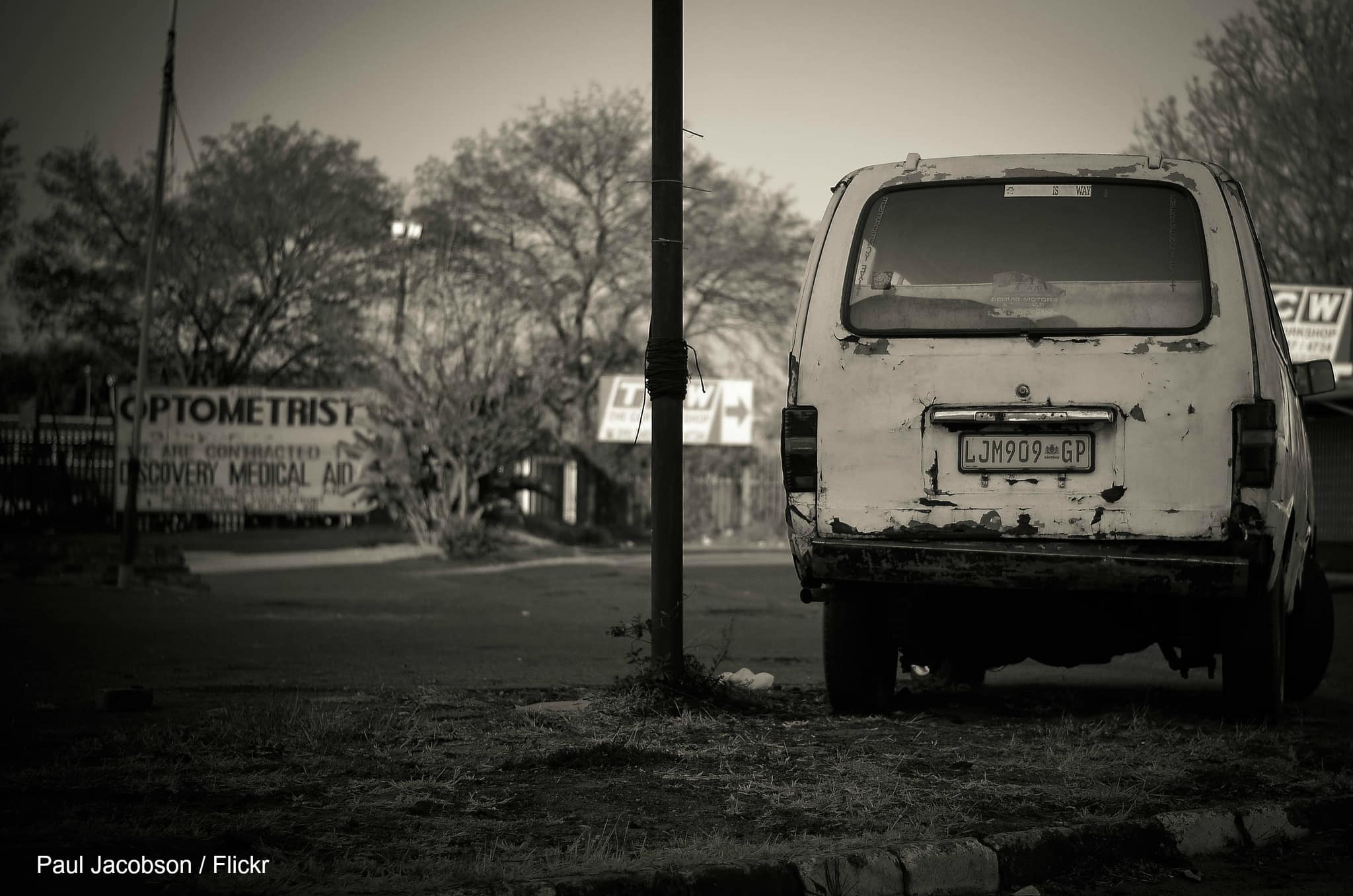
TB: Taxis’ deadly passenger
Millions of South Africans rely on minibus taxis daily, but South Africa’s most widely used mode of public transport could also be ferrying a deadly passenger.

Millions of South Africans rely on minibus taxis daily, but South Africa’s most widely used mode of public transport could also be ferrying a deadly passenger.

Prisoner Lucas Mngadi* died within four months of being diagnosed with colon cancer after complaining for months about pain.

Food is a big issue in South Africa – we’re the fattest country in sub-Saharan Africa and one of the 20 fattest countries in the world. At the same time, one in every four South Africans regularly go hungry

There is something off at Ben’s Tuck Shop in Phuthaditjhaba, about 70 kms outside Bethlehem and a recent OurHealth visit shows it’s the milk.

Bethlehem community members in the Free State recently marched against tuberculosis (TB) in an effort to promote testing and treatment.

On the heels of the recent South African Human Rights Commission’s hearing on the lack of emergency medical service in the Eastern Cape, OurHealth speaks to one woman who says she has never seen an ambulance in 35 years.

Khangezile Primary School east of Johannesburg has been chosen as one of eight schools nationwide to help pilot new, eco-friendly ways for women to feed their families.

Hearing her mother’s voice for the first time in five years brought tears to her eyes, writes tuberculosis (TB) activist Phumeza Tisile just weeks after cochlear implants restored the hearing multidrug-resistant TB treatment took from her.

Dozens of people recently testified before the South African Human Rights Commission about the Eastern Cape's lack of emergency medical services and patient transport. Testimonies paint a stark picture of the thin line between life and death in the rural Eastern Cape.

Eastern Cape villagers are being forced to pay up to R800 each way to transport sick family members to clinics and hospitals as bad roads, ambulance shortages and poorly trained staff conspire against critically-ill patients fighting for their lives.

Xolise Sam watched his sister, Tumeka, writhe in pain for almost a week before she died in Frere Hospital’s Ward Four. She lay screaming in between the seizures that had begun to jolt her frail frame as Xolisile dialled “112” for emergency services again and again.

South African musician Johnny Clegg has donated R100,000 to AIDS lobby group the Treatment Action Campaign to mark World Tuberculosis (TB) Day.

After being diagnosed with multidrug-resistant tuberculosis (MDR-TB), Olebogeng Selumi was recently discharged from the Northern Cape’s Kimberley Hospital. Back at home, it is a daily struggle to stay on treatment – and keep his family safe.

South Africa aims to test up to 6.2 million people for tuberculosis (TB) in the next three years, according to an announcement made yesterday by Deputy President Cyril Ramaphosa.

In 2002, only 25,000 HIV-positive South Africans had access to exorbitantly life-saving antiretrovirals (ARVs) costing thousands of rands. Today, the story is much different and a new book chronicles one of its most important chapters.